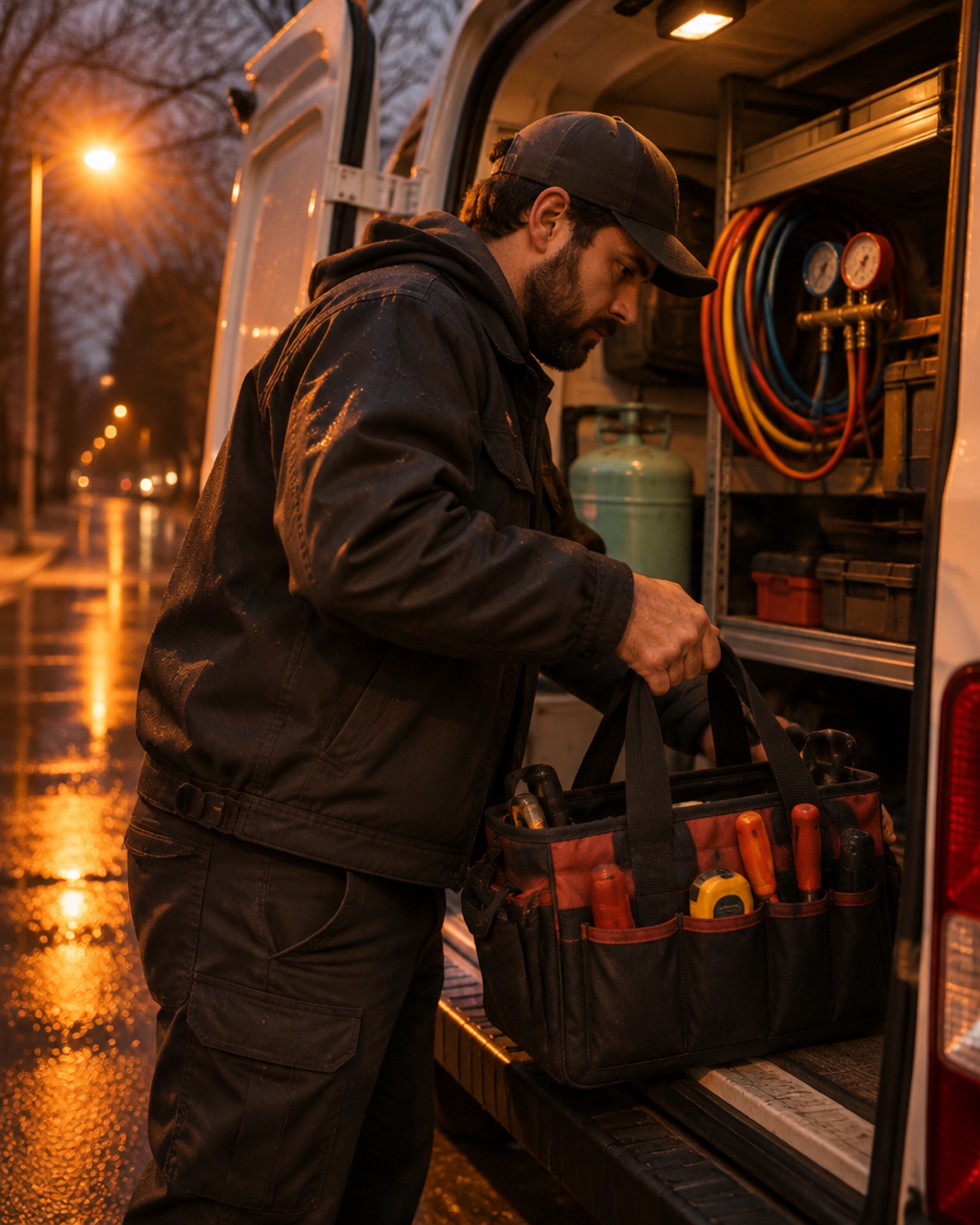
What is an AI dispatch service?
An AI dispatch service uses an AI voice agent to take service requests by phone and turn them into scheduled or dispatched jobs. It answers the call, gathers the customer's address and problem, decides how urgent it is, and either books a slot or escalates to the on-call technician or driver.
For home services and logistics teams, it replaces the late-night answering service and the overloaded office line with an agent that works every call the same way.
How Voxenda handles dispatch calls
- Answer: every call is picked up instantly, including after hours, as an AI answering service.
- Capture: name, address, callback number, issue description and access notes.
- Triage: your rules decide what counts as an emergency, such as no heat in winter or a burst pipe.
- Act: routine jobs are booked into open slots with appointment booking; emergencies are transferred live to the on-call tech with call transfer.
- Record: the job summary and transcript go to your CRM or field service tool, see post-call analysis.
Who uses AI dispatch
- HVAC, plumbing, electrical, roofing and restoration companies.
- Towing, courier and delivery operations in logistics.
- Property maintenance teams for short-term rentals and property managers.
Benefits of an AI dispatcher
- More jobs won: emergency callers book with the first company that answers.
- Fewer wasted truck rolls: better triage and complete job details.
- Calmer nights: on-call techs are woken only for real emergencies.
- Lower cost: flat pricing instead of per-call answering service fees.
AI dispatch for trucking companies, carriers and brokers
In trucking and freight, dispatch lives on the phone. Dispatchers juggle carrier calls, broker calls, driver check-ins and load updates all day, and every unanswered call can mean a missed load or a late delivery. An AI dispatcher takes the repetitive calls off the dispatch team:
- Check calls: the AI agent calls drivers at set times for location, ETA and status, then logs the update.
- Carrier and broker calls: answers rate and availability questions, captures load details and routes booking decisions to your dispatcher.
- Driver check-ins: drivers report delays, breakdowns or detention, and urgent issues are transferred live with call transfer.
- Load updates: outbound calls confirm pickup and delivery appointments with shippers and receivers, using batch calling.
- After-hours coverage: fleet and freight issues at 2 am reach someone who answers.
AI dispatcher vs dispatch software
Dispatch software and a TMS (transportation management system) plan loads, track trucks and store the data. An AI dispatcher is the voice layer on top: it handles the phone conversations that feed that system. Voxenda captures every call detail and can push updates into your TMS, load board workflow or spreadsheet through Zapier, n8n or an API connection where your software supports it.
The result is end to end coverage: your dispatch software plans the work, and your AI phone agent keeps the calls moving. Dispatch teams spend their time on exceptions and carrier relationships instead of routine check calls.
Benefits of AI-powered dispatch for fleets
- Faster response time: every carrier, driver and customer call answered in real time.
- Fewer missed loads: brokers and shippers reach a responsive line.
- Cleaner data: structured call notes instead of scribbled messages, reviewable in post-call analysis.
- Scalable workflow: automate check calls across the whole fleet without adding dispatchers.
- Lower cost: flat pricing instead of extra night-shift staff.
Running a field service business rather than a fleet? The same AI dispatch workflow powers home services emergency dispatch. For freight operations, see AI voice agents for logistics.
AI dispatch software for trucking: what it automates
AI dispatch software for trucking spans planning tools and voice automation. Voice AI covers the phone side of dispatch operations: truck check calls, broker updates, rate confirmation follow-ups and owner-operator communication. Combined with your TMS and load boards such as DAT, an AI-assisted dispatch workflow can automate the repetitive calls end to end, while dispatchers handle routing decisions and carrier relationships. The goal of dispatch automation is not replacing people; it is giving every fleet dispatcher more capacity.